A
(Top score)
CDP 2024 - CLIMATE

The global demand for agricultural commodities is one of the main causes of pressure on forests, leading to deforestation – a major source of greenhouse gas emissions. Recognising the impact our activities can have on forests, and how much we rely on them, we responsibly manage the use of the main commodities associated with deforestation and conversion of ecosystems with High Conservation Value (HCV) – palm oil, paper and timbre, soy, and beef – both in our products and in the packaging of our Private Brands and perishables.
Increasing agricultural productivity while adopting good practices and converting degraded areas are measures that help ensure compliance with the global targets for reducing greenhouse gases and regenerating biodiversity.
Since 2014, we have been mapping ingredients linked to deforestation and the conversion of ecosystems with High Conservation Value in our Private Brand and perishable products. We work closely with our suppliers to collect information on the origin and sustainability certification of these ingredients. This approach reflects our broader strategy to promote responsible sourcing and reduce the environmental impact of our supply chains.
A
(Top score)
CDP 2024 - CLIMATE
A-
(Leadership level)
CDP 2024 - WATER AND FORESTS
We have been members of the Roundtable on Sustainable Palm Oil (RPSO) since 2017 and the Roundtable on Responsible Soy (RTRS) since 2019. These initiatives promote sustainable practices in palm oil and soy production.
In 2019, we joined the Forest Positive Coalition of Action (FPCoA) of The Consumer Goods Forum. We have committed to responsibly manage the incorporation of the main commodities associated with deforestation in our Private Brands and perishables products and packaging. Through this coalition, we support both collective and individual efforts to eliminate deforestation and the conversion of forests in these supply chains, while promoting sustainable forest management, conservation, restoration and respect for human rights.
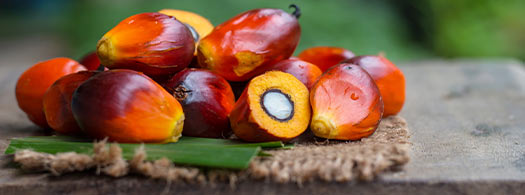
When palm oil is used, we are progressively ensuring that it comes from responsible sources. Since 2019, 100% of the palm oil present in our Private Brand and perishable products in Portugal and Poland has RSPO certification. In 2024, around 75% of the palm oil used in Ara’s Private Brand and perishable products originated in Colombia – with 66% of that volume being RSPO certified.
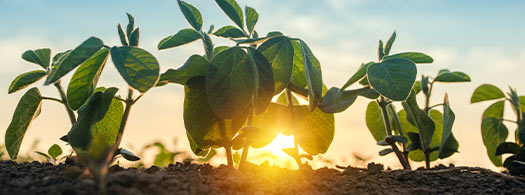
We are enhancing the traceability of soy origins used in animal feed, particularly in poultry and pork categories, where most of the soy in our supply chain is used. In 2024, we successfully traced the origin of 95% of the soy used in our supply chains. Only 4% of our total consumption was direct soy, used as an ingredient in products such as vegetable oils and plant-based drinks.
As a food retailer, we do not directly purchase packaging, making the traceability of the virgin fibres challenging. Nevertheless, we actively collaborate with our suppliers to increase the traceability of virgin paper and wood fibres, reinforcing our commitment to responsible sourcing. In 2024, around 90% of the virgin fibres in our Private Brand products and packaging were certified by recognised by sustainability standards such as FSC®, PEFC or SFI. This progress aligns with our goal of achieving 100% certification for all our Private Brand products and packaging by 2030.


We aim to increase the traceability of beef in order to identify its origin and ensure that it is sustainable – especially in countries with a risk of deforestation. In 2024, we successfully mapped and traced all the beef used in our Private Brand and perishable products to at least the country of origin.
Explore at our Annual Report website a comprehensive breakdown of our sustainability performance, insights and forward-looking strategy in line with the ESRS framework
Certifying production in Mato Grosso
Mato Grosso, Brazil’s third largest state, plays a vital role in the global food system – and in our business – as a major producer of beef and soy. However, its agricultural potential comes with a high risk of deforestation. Since 2021, we have partnered with the Amazon Environmental Research Institute (IPAM), Nestlé and Sainsbury’s to support a project aimed at certifying soy and beef production in the region.
Read the story
Our progress in fighting deforestation
Since 2020, we have strengthened our commitment to fighting deforestation by focusing on four priority commodities: palm oil, soy, paper/timber and beef. Our strategy is built on traceability, certification and collaboration with suppliers – all aimed at building more responsible and transparent supply chains. In 2024, our efforts were once again recognised by CDP Forests, which awarded us the leadership level (A-) for our responsible management of commodities linked to deforestation.
Read the report